
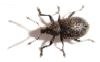
Scarab Beetle or Dung Bettle (Scarabaeidae)
(Category Beetles)
The family of the Scarab Beetles, also called Dung Beetles consists of ca. 23 000 members worldwide and about 200 species in Europe (ca. 40 genra). They can be identified by their last three antennae segments which are arranged like a comb or are thickened. They also have rather short but very strong front legs with little "teeth" with which many species are able to dig.
Many Dung Beetles feed from excrements or rotting plants, explaining where their family name comes from. Some Scarab Beetles even lay their eggs in dung for their little ones to hatch in and grow up in. But not all beetles live in or from excrements, there are also many species that only feed from plant juices or nectar.
The larvae develops in the soil and feeds from rotting plant material, compost or roots and can become a pest when damaging too many root systems. It can take several years for the larva to become an adult beetle and usually the larva overwinters while the beetle dies.
Some people even keep exotic Scarab Beetles from South America or other countries as their pets or breed them at home.
Below you can see a few species common for South Germany:
Please notice the Licencing Information for these pictures!
(Click an image to enlarge)


Copyright © by Chris Schuster
Modified: Thursday, July 21 2005, 13:34 (CEST)